

Jul 31, 2026Posted by Kevin Miller to Play DVD
Quick Summary
Before learning how to play DVDs on Windows, note that modern devices require additional equipment to play them. These usually come from external drives, software decoders, or by converting your DVD content to a digital format.
Have you come across a nostalgic or rare DVD collection at home, but your sleek, modern laptop isn’t equipped with an external drive and multimedia player to open DVDs? This is a common problem among modern computers, since built-in drivers have been discontinued as systems have transitioned to portability and sleek designs. As a result, built-in media players also lack native DVD support. In this article, we will provide a solution for this problem so you don’t have to throw away your discs, as we will review three proven options to help you learn how to play a DVD on modern laptops. To learn how to use such programs, make sure to read our guide below.
Table of Contents
Which Way is the Best One
To obtain objective results for the three DVD player software programs we reviewed, we tested them on various laptops running Windows 10 or 11. Since modern computers no longer have built-in DVD drives, we also used plug-and-play USB DVD drives to access physical DVD media.
During our testing, we focused on observing each method’s ease of use, cost-effectiveness or value, video playback smoothness, and hardware safety when used on your computer. To ensure that our products for review are safe, we made sure that our selected programs are downloaded from official websites and are malware-free.
For a quick comparison of the programs, check out our table below.
| DVD Players | Ease of Use | Playback Quality | Playback Control | Audio Track & Subtitle Editing |
| VLC Media Player | Moderate | Excellent | ●DVD Menu ●Chapter Navigation ●Playback Speed ●Video Repeat | ●Switchable audio track and subtitle ●Loads external subtitle ●Synchronization adjustment ●Customizable subtitle appearance |
| Blu-ray Master Free Blu-ray Player | Very Easy | Excellent | ●DVD Menu ●Chapter Navigation ●Playback Speed Adjustment ●Screen Capture ●Playlist Creation | ●Multiple audio tracks ●External subtitles ●Subtitle synchronization ●Subtitle display customisation |
| Media Player Classic Home Cinema | Easy | Excellent | ●Advanced playback control ●Chapter navigation ●Frame stepping ●Playback speed ●Subtitle editing | ●Multiple audio tracks ●External subtitles ●Subtitle syncing ●Subtitle rendering |
Method 1: The Gold Standard (VLC Media Player)
We will start this guide by covering the safest method for playing DVDs with VLC Media Player, one of the most commonly used third-party multimedia players. In addition to playing digital files, this software can also play external DVDs on your modern computer.
This makes the program a good option if you are looking for an overall media solution that is 100% free and open source. Moreover, it also comes pre-packaged with virtually every audio and video codec, which will completely bypass the lack of native MPEG-2 support on modern laptops.
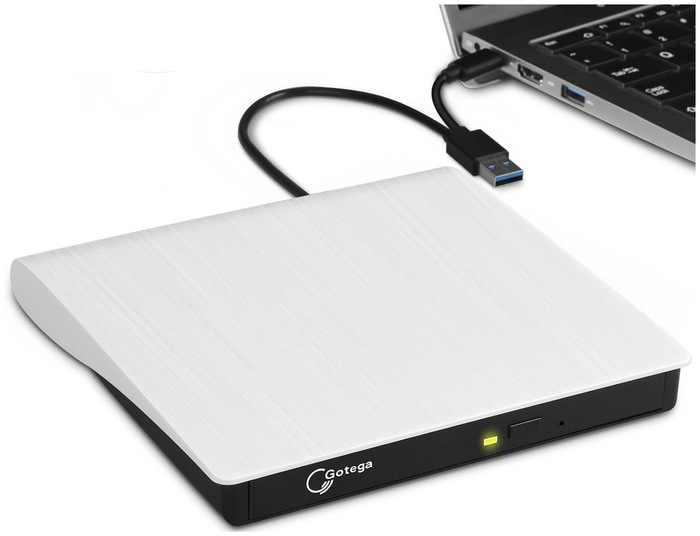
Step 1. Connect the external drive and insert the DVD.
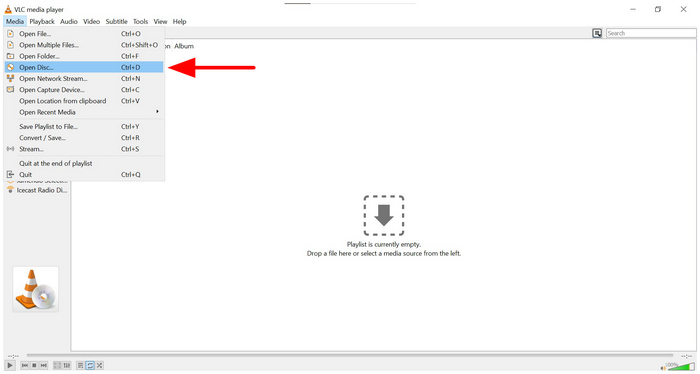
Step 2. Once the DVD has been loaded, open VLC Media Player and select the Media tab. Then click Open Disc in the drop-down menu that appears.
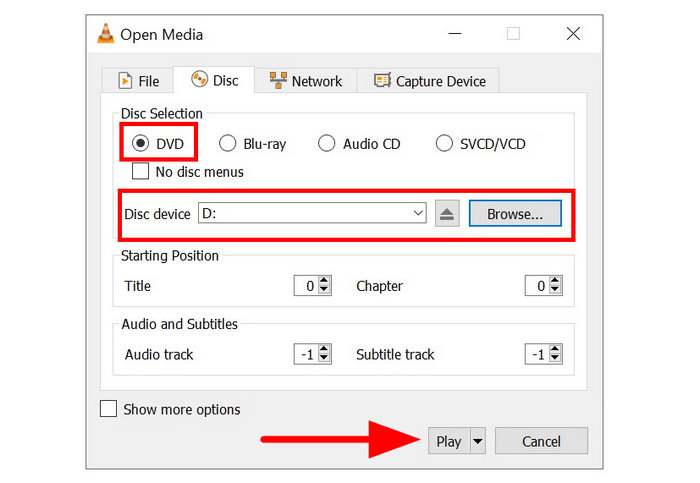
Step 3. In the Open Media menu, select DVD. Then click Browse to select the DVD you loaded on your computer. Finally, click Play to start watching the DVD content.
VLC can handle most interactive DVD menus flawlessly. This will give its users the feeling of using a traditional DVD player on televisions. Unfortunately, VLC only plays your DVD media and nothing more. It is not equipped with advanced options such as AI video upscaling and other quality-of-life enhancements.
Method 2: The Premium Cinema Experience (Blu-ray Master Free Blu-ray Player)
With the open-source solution now discussed, let us move on to the more premium choice that offers high-end audiovisual enhancement and hassle-free region-code bypass, none other than Blu-ray Master Free Blu-ray Player.
Compatible with Windows 10/11 and macOS 10.9 or later, this software is a great option for cross-platform users. It also supports playing DVDs from various sources, including standard DVDs, DVD folders, and ripped ISO images.
Additionally, it excels at handling modern commercial discs, as it can bypass complex copy protections, commercial encryptions, and region code restrictions. To keep up with modern standards, it also supports 4K quality upscaling and Dolby Digital/DTS audio systems for a true home-theatre experience directly from your sleek laptop.
Since it can also be used as a digital multimedia player, it is equipped with perks present in such programs. You can add external subtitles for a better viewing experience, adjust the interface theme and playback settings, and configure other advanced parameters.
To learn more about the program, make sure to read our three-step guide to using it. Do not forget to download it to follow our tutorial easily.
Free Download
For Windows
Secure Download
Free Download
for macOS
Secure Download
Step 1. Load the DVD you want to play on your external drive. Then, open Blu-ray Master Free Blu-ray Player and select the Open Disc option.

Step 2. In the Open Disc menu, navigate to your files and select the DVD you loaded on your computer. Once selected, click on OK to confirm.
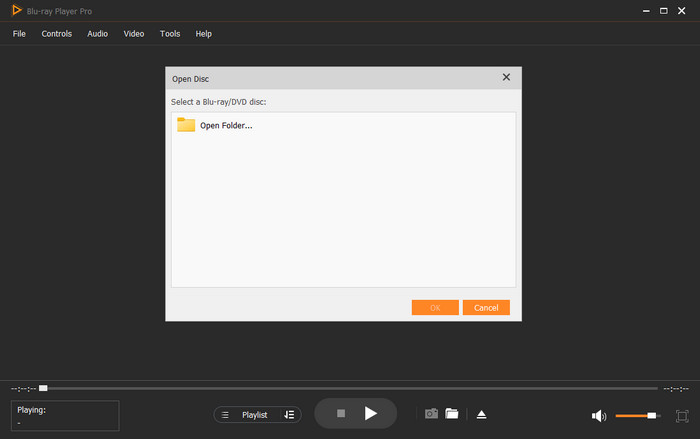
Step 3. Once the DVD media is playing, select the Play button to start the uninterrupted playback with high-fidelity sound.
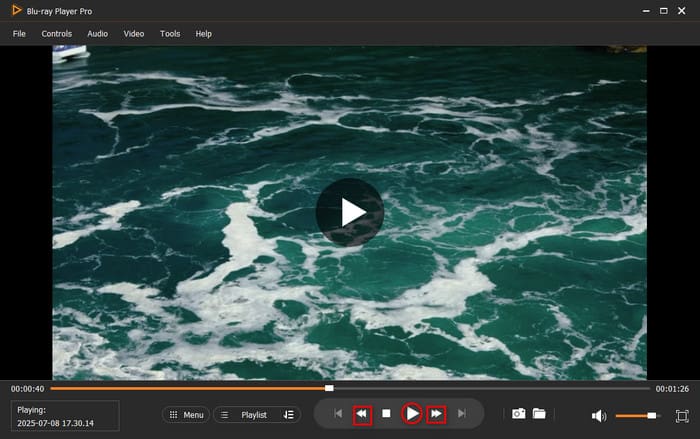
Among the options in this article, Blu-ray Master Free Blu-ray Player is the easiest way to help users learn how to play DVDs on their laptops. However, this should be expected, as the program is designed exclusively for this function. Meanwhile, the other two methods are primarily designed as multimedia players, with DVD playback only as an additional feature.
Method 3: The Minimalist & Lightweight Option (MPC-HC)
For Windows users who want to know whether they can play a DVD on their laptop using a Windows-only option, Media Player Classic Home Cinema (MPC-HC) may be what they are looking for.
This classic Windows media player was one of the most popular options from the early 2010s until its discontinuation in 2017. However, it is still one of the best choices for older and lower-spec laptops where battery saving and low resource consumption are top priorities.
It features an incredibly lightweight footprint that won’t make your laptop fans work double time. It is also completely bloatware-free and focuses entirely on lag-free, hardware-accelerated playback.
Step 1. Load the DVD into your external drive. Open MPC-HC and select File, then choose Open DVD/BD.
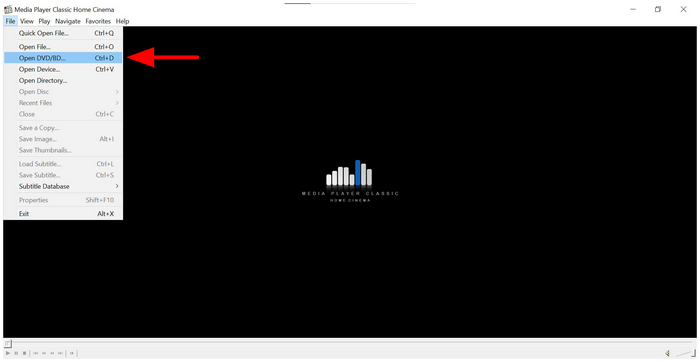
Step 2. In the menu that opens, select the loaded DVD in your file manager, then choose Select Folder. Alternatively, you may also drag the DVD to the MPC-HC window.
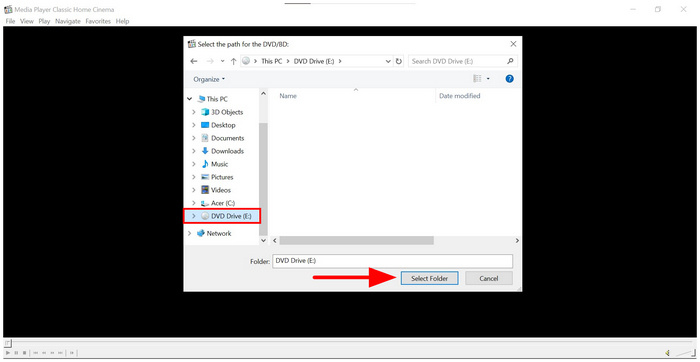
Step 3. Once you have selected the DVD, you can watch its content on your computer.
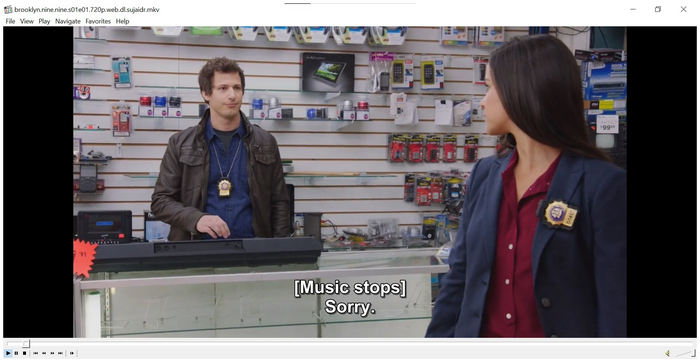
Since it works similarly to VLC Media Player, MPC-HC is a good alternative. It also helps that this Media Player Classic is lightweight and a reliable free DVD player, making it more efficient than our first featured method.
Critical Information You Need to Know
The Region Code Nightmare
Region codes are copyright restrictions on DVD media that work by limiting whether a DVD can be played in a DVD player. In total, there are six region codes. As such, a DVD can only be played in a player with the same region code. Fortunately, most modern external drives and DVD player software are equipped with built-in region-code bypass.
Power Supply Warning
Since playing DVDs on modern laptops requires an external drive and uses more resources than digital videos, expect your laptop’s battery to drain quickly. To fix this problem, it is advisable to watch DVD media while your device is plugged in. Poor power supply may cause unwanted problems, such as poor playback quality or black-and-white DVD playback, which may occur rarely.
Commercial Copy Protection
For modern commercial releases of high-profile movies (Disney, Marvel, etc.), strong DRM protection is usually present. This will prevent you from operating simple DVD ripping and require advanced software to read. Fortunately, the methods we proposed in this guide can all handle these modern releases.
FAQs About DVD Players for Windows
-
Why won’t my Windows 11 laptop play my DVD automatically?
Windows 11 does not have a built-in media player that supports DVDs. You have to use third-party options to play these files. Blu-ray Master Free Blu-ray Player and VLC can play DVDs on Windows 11.
-
Can I use an Apple USB SuperDrive with a Windows laptop?
Yes, you can. However, you need to connect it directly to the Windows port. You also have to install the Apple Boot Camp drivers manually.
-
Is it legal to rip my personal DVDs to my laptop?
No, it is not. Ripping personal DVDs to make them digital is not illegal. However, this will be illegal if you do this on commercial DVDs. You can safely rip DVDs to H.265, H.264, or any modern video format.
-
What is the best free DVD player software for a laptop?
All of the options in this article are solid free DVD players. For premium-quality watching, Blu-ray Master Free Blu-ray Player is good. However, if all you want is to play the DVD, VLC is a good option.
-
How do I play a DVD on a laptop without an external drive?
You have to use a laptop with a built-in driver. Alternatively, you may use ripped ISO images and play them as DVDs. The only option to play DVDs on modern laptops is via external drives.
Conclusion
While the build and features of modern laptops have changed, your access to your favorite physical media shouldn’t have to. Fortunately, learning how to play DVDs on laptops is not as complicated as most beginners think. With that in mind, we recommend VLC for long-term convenience on modern laptops. On the other hand, using Blu-ray Master Free Blu-ray Player is a better option if you prefer better video quality. To enjoy watching classic DVD releases in modern video quality, make sure to download Blu-ray Master’s exclusive option.
More Reading
Play DVD Movies
Easily play Blu-rays, DVDs, and various video/audio formats with rich playback features.
100% Secure. No virus